Sunday, January 17, 2016

Buenos Aires City Tour & Tango Show

December 15

Today we had an all day tour with a local guide named Pablo. He was highly recommended on Cruise Critic and TripAdvisor. http://www.yourfriendinbsas.com.ar/ We had a nice breakfast at the hotel and Pablo was waiting for us downstairs when we arrived. Since the cemetery was right across the street, we started there. It’s the most interesting one we have ever visited. Such a display of wealth with the size and ornateness of the mausoleums. It was nice having a guide to explain the various areas and the stories behind the people buried there. Of course we had to see Evita’s family mausoleum. By comparison it wasn’t all that grand.
 entrance to cemetery


family crypt of Evita


 this humble one was built by the Masons

Pablo
 
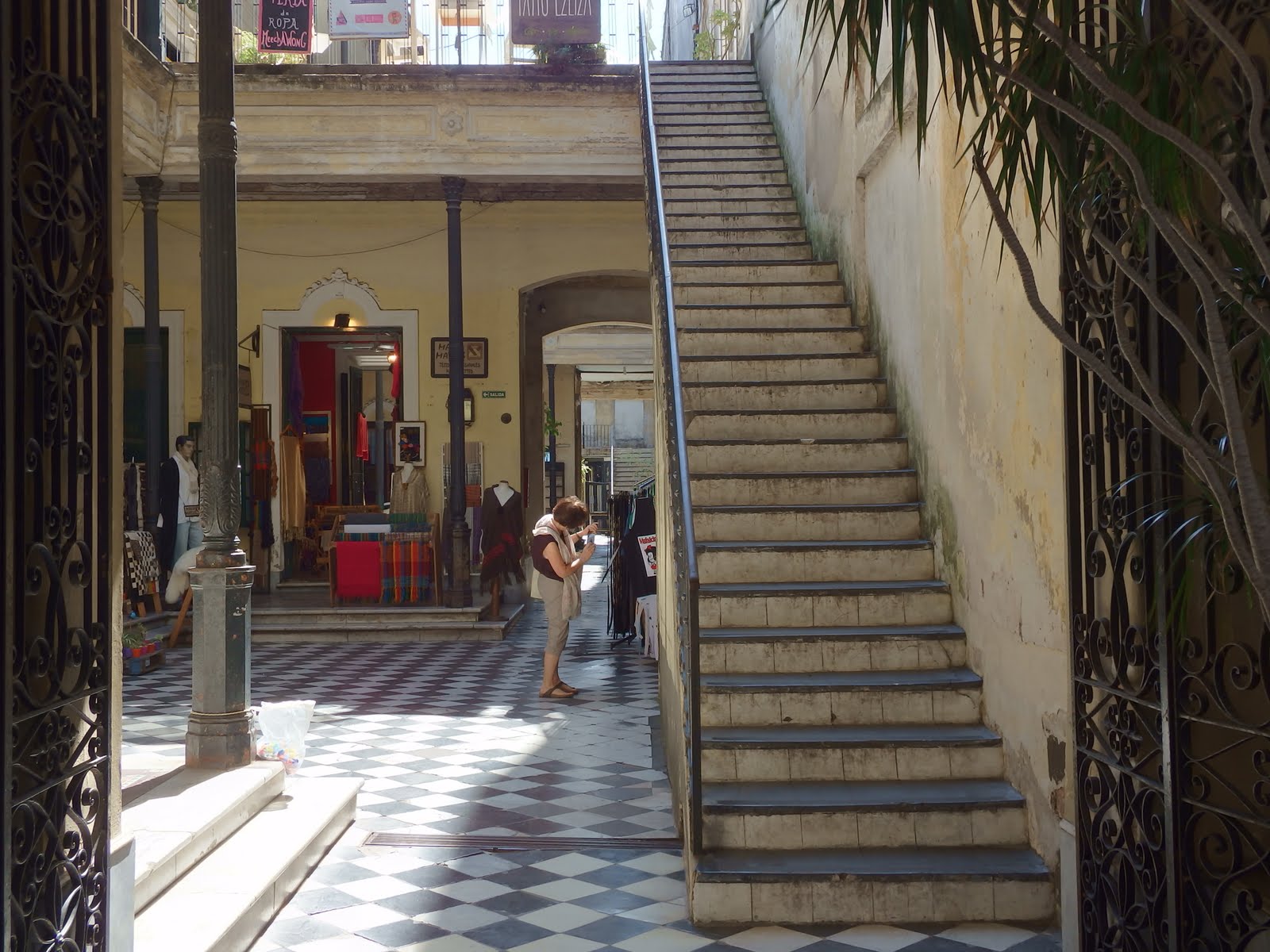
We visited various neighborhoods (Plaza de Mayo (with Evita's balcony at Casa Rosada, seen from the square), San Telmo, National Congress, La Boca (Caminito and view of Boca Stadium, "La Bombonera"), Recoleta area, Cafe Tortoni, view of Teatro Colon, Puerto Madero (Woman Bridge included), and most was done by foot with a few taxi rides, a subway trip and a local bus thrown in to get us around efficiently. My favorite neighborhood was La Boca. Very colorful and tango dancers were performing. Pablo also showed us a couple of places we would not have found on our own such as the beautiful ceiling in a local mall and a Burger King that had beautiful artwork upstairs that is housed in a turn of the 20th century home.
 El Gran Gomero (Rubber Tree)
 me helping the statue hold up a branch

 protests over the new president that took office

 Casa Rosada - Presidential Palace
 famous balcony where Evita gave her speech
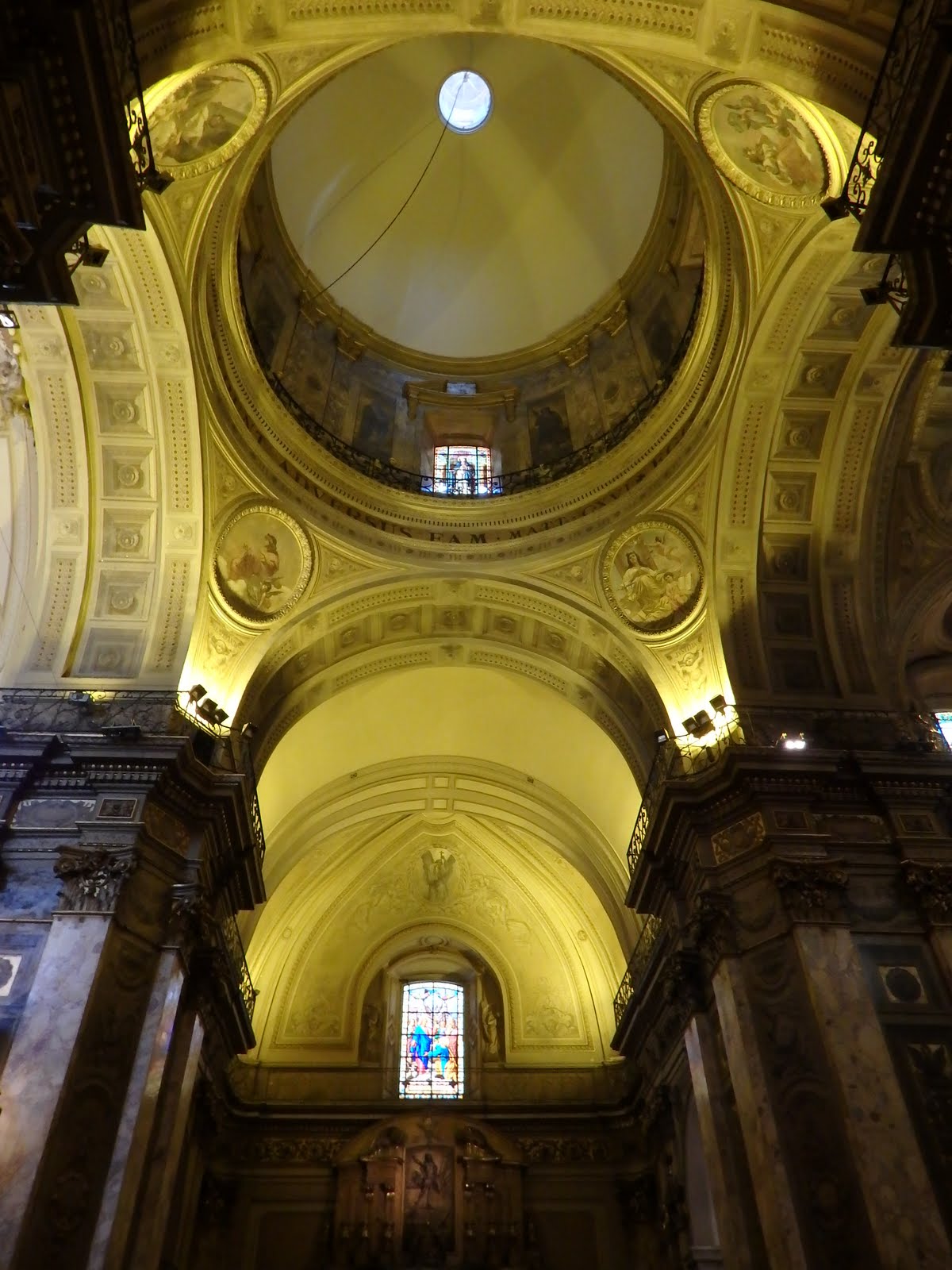
 Metropolitan Cathedral
 mosaic floor


In a small local mall:

 A surprise stop to see a Burger King housed in this beautiful setting:


 subway station
 art work in subway station


 National Congress Building


A torture center now under a freeway, Club Atletico, is undergoing excavation. Already, memorials have been placed at the site.
We stopped at a spot for lunch that looked to be in a “back alley”. El Obrero Restaurant was packed with locals and tourists alike. Pablo ordered for us a selection to share amongst the 3 of us. For the appetizer he ordered calamari and for a main a steak and home-made ravioli. The steak was just OK, but the ravioli was phenomenal. We were stuffed and skipped dessert. Since Panama has such bad tasting and tough beef and Argentina is known for their beef we were pretty disappointed with the steak. They seem to really like “lomo” (tenderloin) and it isn’t as flavorful as a ribeye. They may have had that as a choice, but he wanted to order for us and we let him. There is a lot of Italian influence in Buenos Aires. Their Spanish has an Italian accent and their pasta is as good as any in Italy.
 Pablo talking to a local outside of the restaurant
 inside El Obrero

 the owner and Pablo
 touring La Boca area


 futbol stadium


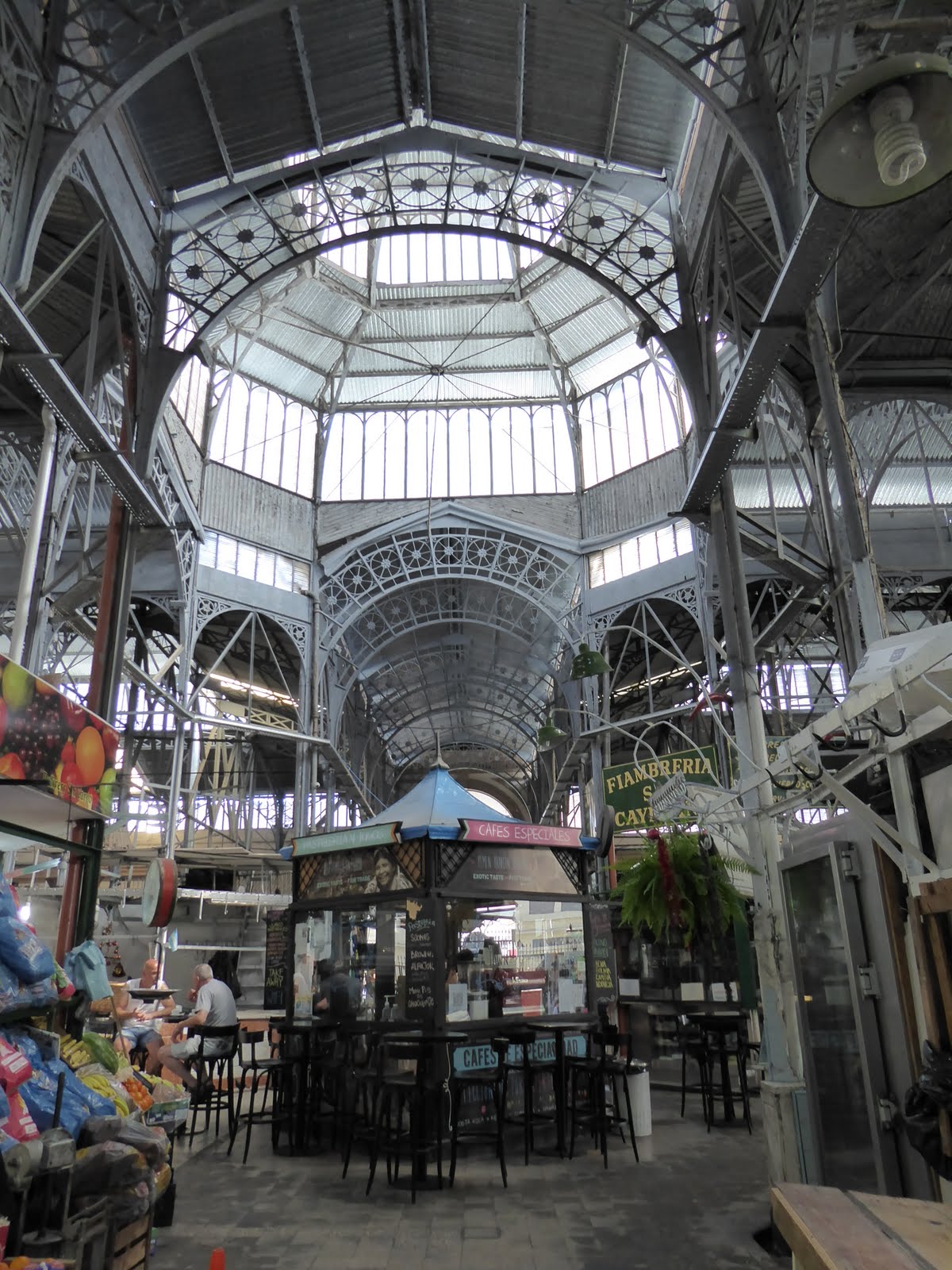
 Mercado de San Telmo
 Greg & Pablo


 Women's Bridge Puerto Madero

 book store used to be an opera house


 café in the bookstore

 Floralis Genérica is a sculpture made of steel and aluminum located in Plaza de las Naciones Unidas

 parrots flying by
 Gelato stop
entrance to our hotel
With Pablo we were able to get a very good overview of BA. Pablo booked a tango show for us this evening. He escorted us back to the hotel and said that Sr. Fabian would pick us up for the tango show later. We had time to kill so we went in search of a gelato place that was recommended and the dark chocolate orange was to die for. I had researched many of the numerous tango shows all with different styles. Reviews were all over the page on all of them, so I chose a traditional one.

Esquina Carlos Gardel is considered the Tango temple of Buenos Aires and is named after the most renowned Tango composer and singer, Carlos Gardel. It is located in Abasto; an area which is known as one of the principal Tango neighborhoods of Buenos Aires during the 1930's – Tango’s ‘Golden Age’ - and was also the neighborhood where Carlos Gardel himself grew up.
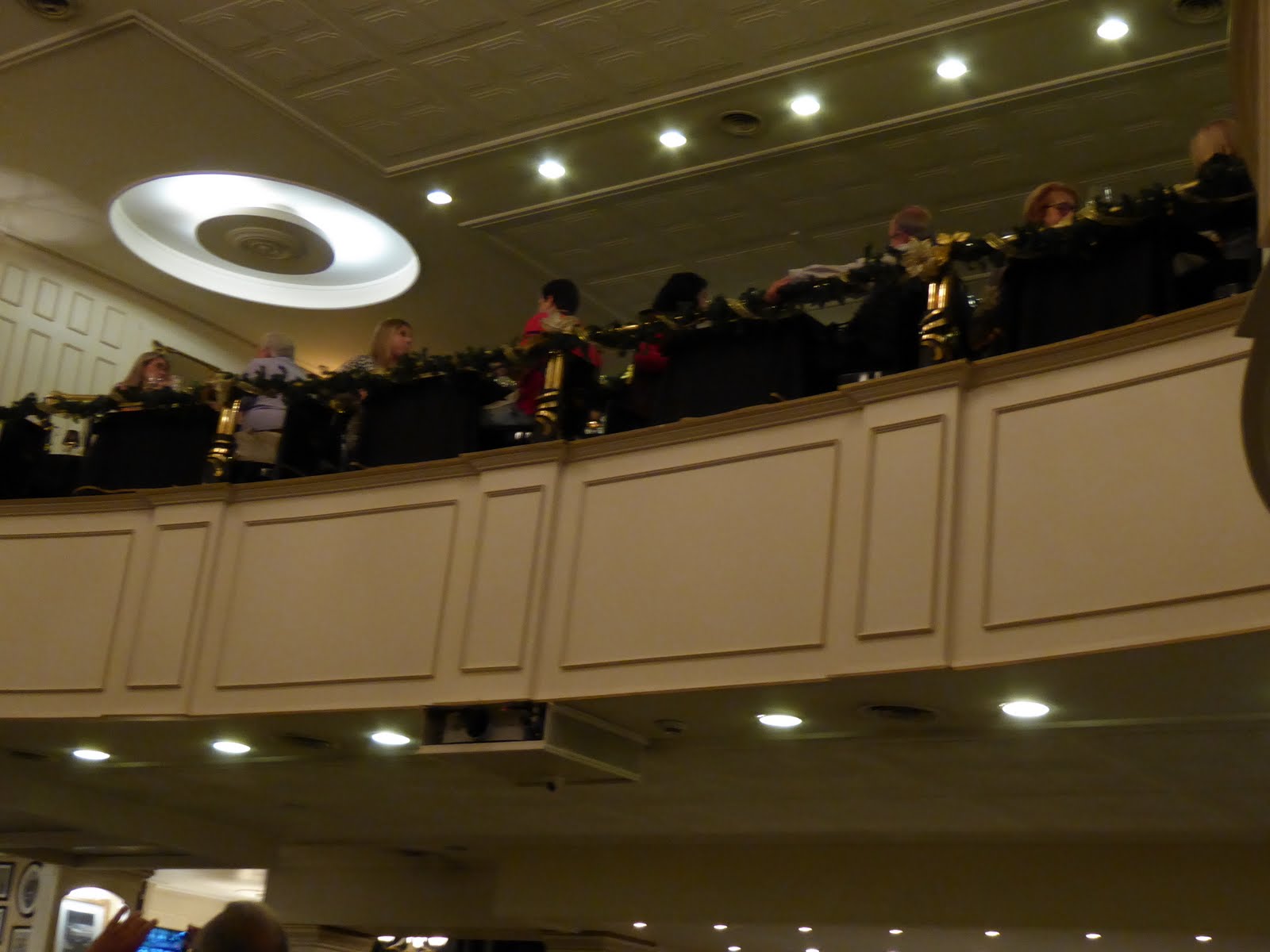
Esquina Carlos Gardel used to be a restaurant called "Chanta Cuarto" where Carlos and his friends would meet up to write tango lyrics and sing. Nowadays you can enjoy a wonderful Tango evening in this very same place. The top quality typical Argentine food (named after Tango songs) and the very professional tributes to the maestro Carlos Gardel, make for an authentic Tango night out in Buenos Aires. Esquina Carlos Gardel is characterized by its superb cuisine, an exquisitely decorated Art Nouveau style ambience that perfectly recreates the sophistication of the most luxurious traditional dining rooms and makes you feel like you’ve travelled back in time – to the luxurious 1930’s.
We were seated just off center very close to the stage and the food was pretty good. We had empanadas for appetizers, steak for main and then they served a sampler of several different desserts. I’m sure we could have found a better meal elsewhere, but it was pretty good and definitely convenient to eat there. They show a video while you are eating of the story of tango and how it evolved. Then we had a couple of hours of various tango styles, singers and orchestra performances.


The night ended just after midnight and we were returned back to our hotel with the tango show’s shuttles.
It was a late night, but we didn’t have a very early a start the next day for the Estancia .
We enjoyed the day with Pablo so much that we sent him an email to see if he had the day free for the last day of our trip on January 13 for the Tigre Delta Tour. He did so we booked it. We were going to do it on our own, but we figured after over 3 weeks in Antarctica we would be "done thinking" by then and he really did make it easy to see the sites as well as learn more about it at the same time.
If you are a glutton for punishment and wish to see more photos, I have added photo albums on Picasa. https://picasaweb.google.com/AKanies

Our Argentina & Antarctica Adventure begins!


December 14 - Our adventure begins!
Roadrunner was about 10 minutes or so late picking us up as the driver was new and didn’t know where Coronado Bay Condos were. He was told to turn at the defunct Tryp hotel when he should have been told to turn just after the Tryp. So, we were getting slightly nervous, but all was well and he was a pleasant gentleman from Canada and we had a nice chat during the drive.
We arrived at Panama’s Tocumen Airport and had a Cinnabon to tide us over until they served us lunch on the plane as our flight departed at noon and arrived in Buenos Aries at 9:18p. The flight was just over 7 hours. The airport had some pretty Christmas decorations.

 
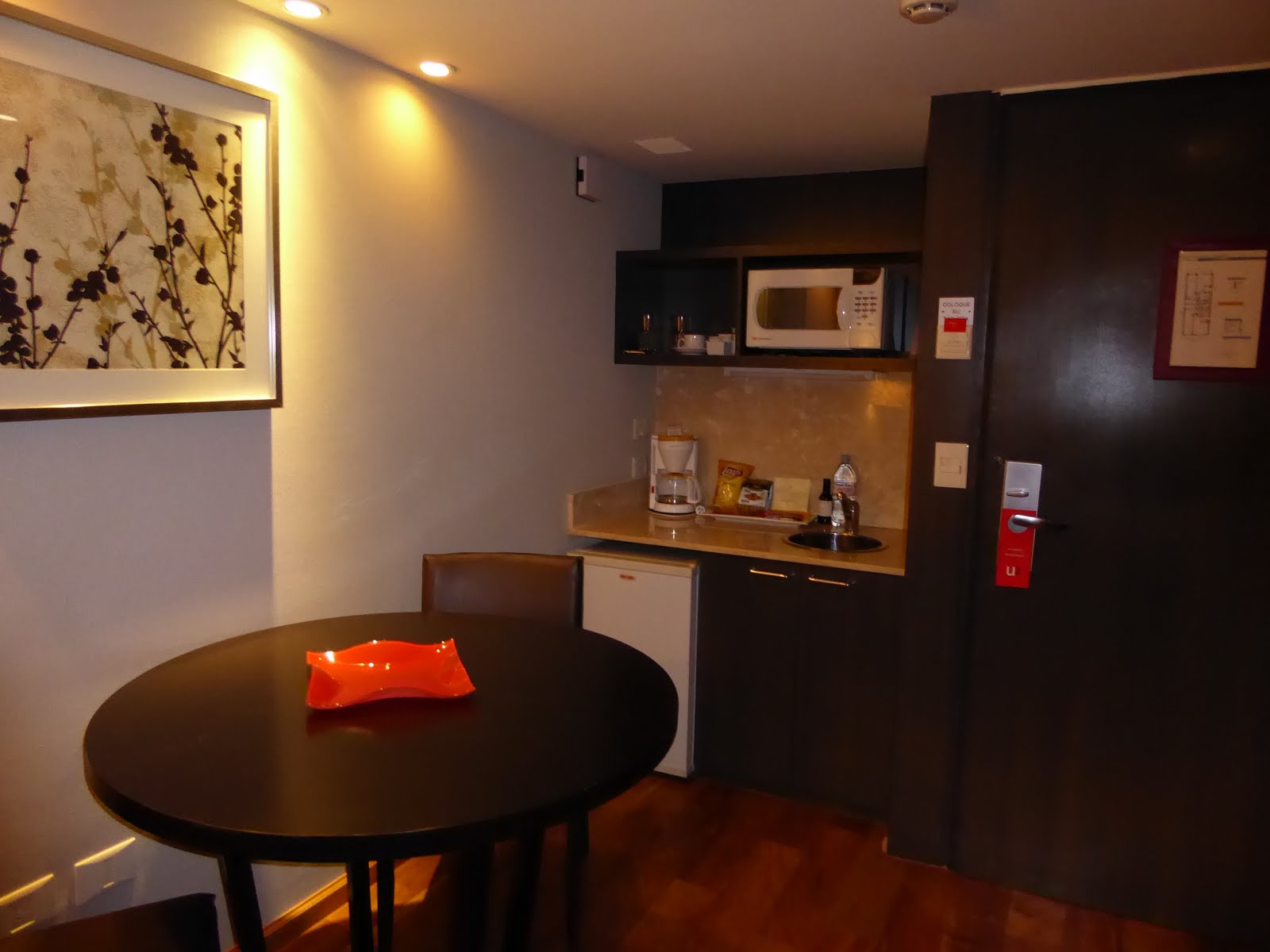
Sr. Fabian was waiting for us holding a sign with our name at the Buenos Aires Ezeiza International Airport, which is always a relief when you book something in advance. He drove us to the Urban Suites Hotel in the Recoleta area. It’s a small Boutique hotel with large rooms and the bed was comfy and the shower had plenty of water pressure and hot water! The famous cemetery is right across the street and we got good views from upstairs, since our room didn’t have a view of it.


Recoleta Cemetery from upstairs patio of our hotel
 

We were exhausted and unpacked a tiny bit and went to bed. We meet our guide at 9:30 tomorrow morning.
 

Sunday, December 13, 2015

December 1 - 13

Merry Christmas & Happy New year!

It’s been a busy couple of weeks getting ready for our upcoming travel to Antarctica. We had a group lunch at Bay View which is a lovely setting on the beach. Always nice catching up with friends and the food was good. What a great group of friends!


Iguana in a tree at the restaurant
We had 2 different couples join us (on separate days) for our morning walk in the woods. Of course, as it often happens when people come along, you don’t always see much. One couple did get to see quite a few Red-legged Honeycreepers.
 Red-legged Honeycreeper - male
 Red-legged Honeycreeper - female
 Rufous-breasted Wren
Yellow-faced Grassquit
Here are a couple of shots from the rest of our walks:
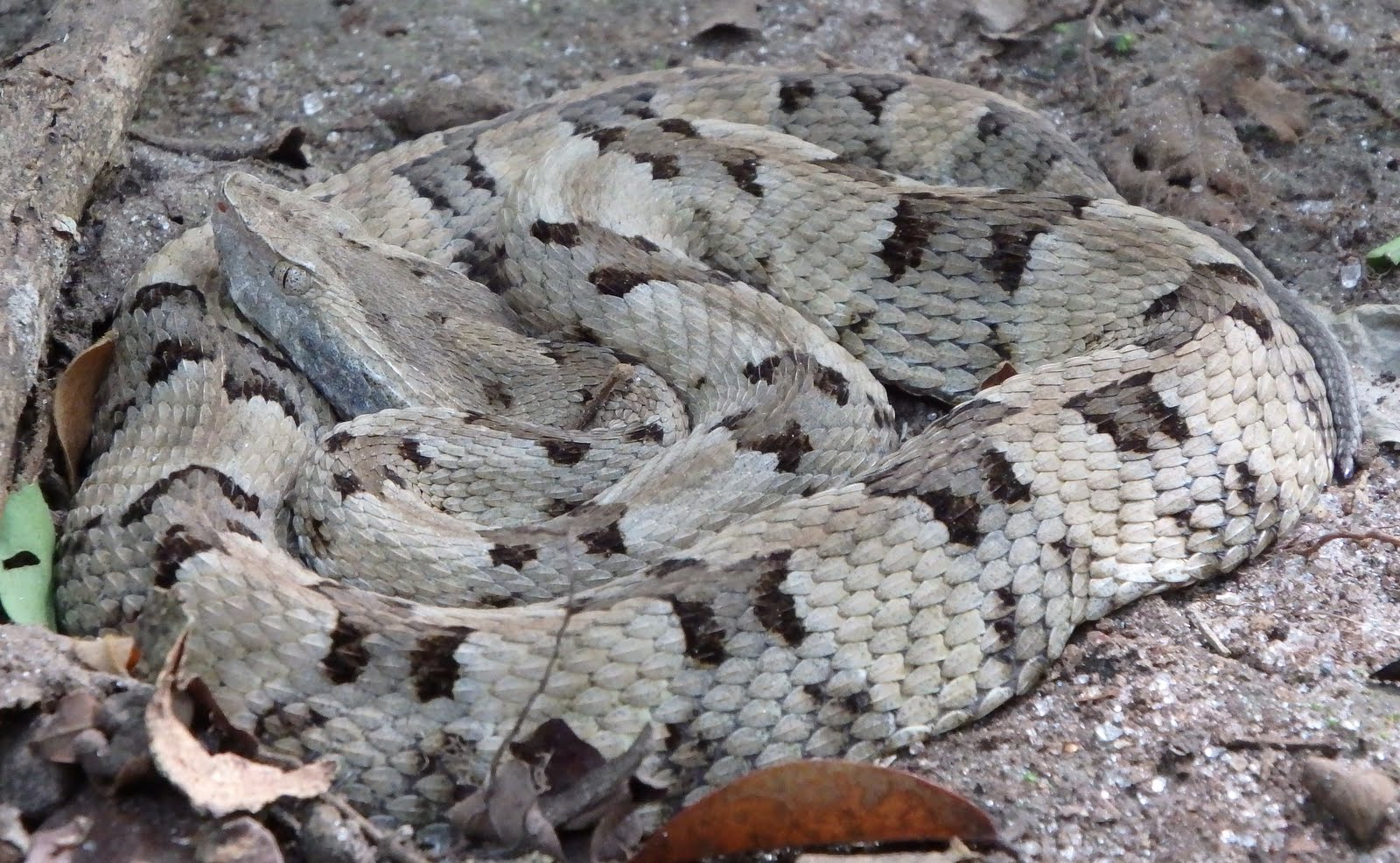
 Hog-nosed Pit Viper
 Hog-nosed Pit Viper (it was a small one)
 smallest Praying Mantis I've ever seen, about 2" or less
 It has been in the same place for a week and has grown quite a bit
 American Kestrel
 Scarlet Tanager - female
Great Blue Heron
 
We had a whole line of tiles buckle up from the bedroom out to the living room. It sounded like gun shots when they popped. Greg just got done saying that the bedroom door was dragging on the ground. We both were standing there staring at it when it went in both directions. It’s been a common problem here at the Bay. I had just taken out all of the potential clothes to take with us and was washing and air drying everything as well as spreading out all the misc. stuff that will be packed, when Sharon called to say she needed to come down and take pictures of the tiles. Greg had spent most of the day taking up as many of the loose tiles as possible. Any that wouldn’t come up that are popped we can’t walk on them, so it’s a pain to tip toe around the main walking path between the 2 rooms and the entry hall. Sharon gave us some rugs to put over the bare floor so that helps.
We are often asked how many countries we have been to. I do keep track on a spreadsheet, but I usually can’t get in the ball park of the actual number when just randomly asked. We also are often asked what our favorite place is. The last question is impossible since we find something special about everywhere we go. (of course a few favorites float to the top, though I don’t see the point in picking a favorite anything…) After this trip we will have been to all 7 continents and 69 countries. Greg has been to a few more with his job and from his time in the Navy. (Pakistan, Cuba and a few others)
It looks like we are getting pretty well packed and ready! 1 checked bag each and our carry-ons.

Internet will be sketchy while we are gone, so I don’t have high hopes of keeping up the blog while we are away.  If anything it will be text only and will add photos when we get back. Most people said the internet was intermittent and very slow if you get it.
 
Hope everyone has a wonderful holiday season!
 

Saturday, December 12, 2015

Antarctica & Argentina Schedule

Crossing the Circle via Falklands (Malvinas) & South Georgia: Epic Antarctica on Quark’s Adventurer of the Seas.
Here is our schedule:
14 December — 8:00 Pick up by Road Runner for transfer to airport for our flight to Buenos Aires PTY 12:10pm EZE 9:18pm - check into Urban Suites Hotel http://www.lehotels.com/recoleta/ 
15 December — City tour with Pablo Piera & Esquina Carlos Gardel Tango show & dinner http://www.yourfriendinbsas.com.ar/ http://www.esquinacarlosgardel.com.ar/
16 December — Estancia Santa Susana http://esantasusana.com.ar/english.htm
17 December — flight to Ushuaia AEP 4:40am USH 8:15am check into Albatros Hotel (free day to knock around) http://www.albatroshotel.com.ar/en/index.php?lang=en
18 December —Ushuaia, Argentina - hike Tierra del Fuego National Park & Fin del Mundo train http://www.trendelfindelmundo.com.ar/en/index.html
18 December — Ushuaia, Argentina (this day is part of our Quark Expedition & their descriptions of the expedition)
Nestled within the Tierra del Fuego archipelago, Ushuaia offers a surprising number of shops, museums, cafes and restaurants. Great Argentinean steak and seafood abound, as does plenty of tasty chocolate to enjoy after you work up an appetite by exploring the nearby mountains or national park.
19 December — Embarkation Day (Happy Birthday to me!)
As we embark, the anticipation and excitement grows for what lies ahead. As every Antarctic adventure presents new opportunities and experiences, Embarkation day is just as exciting for your Expedition Team as it is for you. They’re onboard to ensure your comfort and safety, as well as help make your wildlife dreams come true.
20 December — At Sea
There are many activities to keep you engaged while we’re at sea. You can take advantage of the library of books available on your ship, hang out at the bar chatting to other travelers or spend time out on deck, admiring the sea. Your Expedition Team will also conduct a series of presentations to familiarize yourself with how to prepare for Zodiac cruises and shore landings.
21 -22 December — Falkland Islands (Islas Malvinas)
The Falkland archipelago contains two main islands - East and West, which we will explore by Zodiac excursions and daily landings. These rugged islands have a frontier type feel to them, especially at Port Stanley - the largest settlement on the islands. It’s an interesting British outpost type place, where you may just as easily wander into a pub as you will a church or museum.
With your camera at hand, our wildlife sightings in the Falklands should include at least three species of penguins and two endemic bird species - Cobb’s wren and the Falkland’s flightless steamer duck.
Your team of lecturers and specialists will be sure to educate you on the local flora and fauna so that you get the most out of a memorable time in the Falklands.
23 – 24 December — At Sea
En route to South Georgia you’ll cross the invisible biological boundary unique to Antarctica – the Antarctic Convergence. This meeting of oceans is what creates the abundance of krill and marine life that attracts large cetaceans, such as humpback whales.
25 – 28 December — South Georgia
Evidence of the old whaling and sealing heydays is still found throughout the island. You’ll be surprised to learn that the whale and seal populations were once decimated here, as today their populations are strong, with massive rookeries to be seen.
One significant and historic site that may be visited is the grave of the great explorer, Sir Ernest Shackleton. His grave at the settlement of Grytviken, which is also home to an old whaling station and a research station, is a day for reflecting on what it must’ve been like to be one of the first explorers to this unforgiving, yet beautiful environment.
While South Georgia’s history is an important attraction to the islands, it is the wildlife on South Georgia that you and your shipmates will likely find the most captivating. Often referred to as the Galapagos of the Poles, South Georgia contains an exceptional quantity of wildlife. Each landing you make on South Georgia will open your eyes to a new wonder of wildlife. One day you may see rookeries with a hundred thousand pairs of king penguins waddling on the beach. The next day we may see another beach with thousands of fur or elephant seals.
The grasses, mountains and beaches of South Georgia all play an important role in the breeding and survival of different bird and animal species. Your Expedition Team will be happy to share their knowledge of how these vulnerable relationships all play out on the island.
29 – 30 December — At Sea
Antarctica awaits; along with its own penguin and seal species. While you’re at sea, you can enjoy some quiet time or take in presentations by the Expedition Team, which will cover everything from the history and geology of Antarctica to tips on identifying different species and what makes them each unique. With good weather conditions, a landing at the South Orkney Islands may mark your official landing on Antarctica.
31 December 2 January — South Shetland Islands and Antarctic Peninsula
The most common reaction to arriving at the white continent is a sense of reverence and awe. The experience is hard to put into words. You will discover that Antarctica is a land of extremes; at one moment you’ll be overcome with a feeling of complete silence and loneliness, then the next you’ll be laughing at the comical antics of a curious penguin. Glacier hikes, visits to research bases and, of course, communing with the seals and penguins are sure to keep you smiling each and every day. Perhaps you’ll catch sight of the fearless penguin-eater, the leopard seal, or come eye to eye with a curious Minke whale while out on a Zodiac ride. Each day and each landing will present a new collection of creatures to entertain you and keep your camera shutter busy.
If you find yourself wanting more, then perhaps you’ll treat yourself by booking our kayaking adventure option (reserve in advance when booking your trip) or if you’re feeling a bit overwhelmed, a little shock therapy courtesy of a polar plunge might be what you need!
2 to 4 January — The Antarctic Circle
Crossing the Antarctic Circle is an impressive achievement, as most expeditions to the Peninsula do not come close to reaching this far south.
With a toast to the first explorers who ventured here, you can raise a glass of champagne and take pride in knowing you’ve made it to a part of the world still visited by very few people. This is raw Antarctica, home to the midnight sun, with potential for some fantastic iceberg sightings.
5 to 6 January — Northbound Along the Peninsula
If you haven’t had your fill of Antarctic wildlife and icebergs by now, you’ll surely be satisfied by the time we return to the Drake Passage. We’ll continue to journey onto land and out by Zodiac twice daily. Your Expedition Team will also be on the lookout for any species of penguins, seals and whales that may have eluded you on the journey south.
7 to 8 January — Crossing the Drake Passage
After more than a dozen days of memorable wildlife encounters, your journey home begins. Crossing the Drake Passage is your unofficial rite of passage, putting a final stamp of approval on your Antarctic adventure.
9 January — Disembark in Ushuaia, Argentina
After breakfast aboard the ship, it is time to part ways and say goodbye to your Expedition Team and fellow travelers. We will transfer you to the airport for your flight.  We have free time until our flight at 4:20. That evening we will check back into the Urban Suites Hotel in Buenos Aires.
Important reminder: Embracing the unexpected is part of the legacy – and excitement – of expedition travel. There are no guarantees that we can achieve everything we set out to accomplish. A measure of flexibility is something all of us must bring to a voyage. There are nearly 200 recognized sites in the Antarctic Peninsula and South Shetlands and the places mentioned above may be changed to others equally as interesting.
10 January — flight to Iguazu Falls AEP 9:20am IGR 11:05am and check into the Sheraton Hotel in the Park and self-tour. http://www.sheratoniguazu.com/
11 January — take a taxi to the Brazil side of Iguazu Falls & return and finish the Argentine side.
12 January — finish exploring the Argentine side of the falls until our flight back to Buenos Aires and check back into Urban Suites Hotel. IGR 9:30pm AEP 11:25pm
13 January — Self-tour La Tigre Delta with a train ride then a boat ride and lunch
14 January — Fly home at 11:40am returning at 5:04pm where Road Runner will drive us home.
 

Tuesday, December 8, 2015

Antarctica Planning

Much like planning our trip to Africa, we put a lot of thought into the experience we wanted to have for visiting the white continent.

Choosing an expedition company and a ship:
We knew we didn’t want “a drive-by cruise” on a typical cruise ship. We love the typical cruise ship experience, but generally they rely on one shot (maybe 2) at getting a flight onto the Antarctic peninsula or a smaller boat making a landing depending on weather with really over-priced excursions just to spend a couple of hours there, with many people saying they didn’t get to go at all. If this isn't important to you, then a shorter more luxurious trip on a typical cruise ship would be your best option.
We wanted an expedition icebreaker ship with around 100 passengers since Antarctica has a 100 person at a time limit on shore at a time. Larger ships rotate the groups and you spend less time exploring on land and by zodiac.
How long the cruise should be was another consideration. The shorter ones didn’t go to South Georgia which is considered to be the Galapagos of the South for their diverse and plentiful wildlife or they skipped the Falklands and maybe had only one shot to make the landing on the peninsula. Plus, it was a long way to go and crossing the "dreaded" Drake Passage for just a few days really didn’t make a lot of sense to us. So, we opted for a longer cruise with 23 days on Quark that includes the Falkland Islands (Islas Malvinas), South Georgia Islands and it crosses the Antarctic Circle. We will have several days to attempt landings on the continent. Quick trips are fine to “tick the box” to say you’ve been there (nothing wrong with that either), but we want to actually experience it up close and personal and have more time to just be with the animals and watch their behavior. We want to be close to penguins waddling or tobogganing by and hear them and yes, even smell them. (people recommend something to put under your nose to prevent the gag factor) We wanted to get up close and personal to seals and possibly whales. Yes, even experience the dreaded Drake Passage as we could have chosen to fly that portion of the trip.
Quark came pretty highly recommended as a company for the experiences onboard and off on excursions. The expertise and competence of the expedition staff is very important on a trip like this. I’m sure the other ones would have done a fine job as well (I researched quite a few), but this one just seemed right.  http://www.quarkexpeditions.com/en/antarctic We chose Quark’s Sea Adventurer with 117 passengers. Since about 20 people will choose the kayak option offered, that will let everyone else go on shore at once. Weather can change quickly and the larger boats rotate whether you are on land or on a zodiac trip and many reported that only the first group got to go ashore as the weather suddenly got too bad to make another landing. (or the reverse)
We used the same travel company that booked our Amazon River Cruise. NEI Nature Expeditions International. http://www.naturexp.com/destinations/desti_antartica.html Michelle has been a joy to correspond with, providing prompt and thorough replies. I was going to book directly with Quark and got a comparison quote from NEI and it saved us a bunch. (15% early booking discount from Quark plus past passenger rebate of $550 per person with NEI). 
We booked cabin 105 on the Lower Deck. (in rough seas lower is better) Cabin placement probably isn’t a huge issue on a ship this small, and I’m sure like most cruises we won’t spend a huge amount of time there. (not like you can sit out on a balcony or even open a window.) So, since it’s a pricey trip, we opted for one of the cheapest type of cabins and since they are lower in the boat they should experience less motion in rough seas.
Quark included one night at the Albatros Hotel in Ushuaia, Argentina before the cruise. We added 1 more night there, just in case luggage/flights don’t go as scheduled. The intra-country airline is Aerolineas and Latin American airlines are notorious for strikes or just canceling flights and we didn’t want to risk not making the ship.
We also generally like to spend a few days before and after a cruise as well to explore the local area and again to make sure luggage catches up with us or if there are other issues. We fly into Buenos Aires and we have not been there before so we will spend a couple of days exploring.
CLOTHING:
Once we chose the expedition company and chose the itinerary and ship we wanted, the next thought was “we’re going to need more clothes”. OK, for those that know me, I’m a warm weather kind of girl. I don’t do cold. Someone (A. Wainright) said “There's no such thing as bad weather, only unsuitable clothing.” While I’m not convinced that is true, we did put a lot of research into the various layers we would need comparing different brands etc.
Quark provides a pretty good list and I read various reviews from people who had gone to Antarctica and they shared what they thought was useful and also what wasn’t useful.
Quark provides knee high muck boots for the duration of the cruise. They are waterproof for the wet landings and for ease of washing off penguin poo. They also provide a waterproof jacket with tons of pockets and a zip out fleece liner for warmth. Other than its’ bright yellow color, people seem to love them.
The one thing you don’t want to be is wet. So, it was recommended that you have a least 2 of everything in case one got wet, plus one could be washed and drying while you wore the other set. Weather could be warmer or colder than expected, so multiple layers to choose from was mandatory. (no, not to be worn all at the same time...though I might....ha ha.)
Base layers:
Lightweight: I had a combination of WinterSilks and Cuddl Duds already. They work well under regular clothing and can double as sleepwear. They will also come in handy if the wool mid-weight layer is too itchy or I need an extra layer of warmth. I ordered another pair of Climate Smart Cuddl Duds.
Midweight: I figured I would wear these the most. I got one pair of SmartWool and a pair of Patagonia Capilene®. Both have great wicking properties to keep moisture away from your body.
Expedition weight: I got one pair of Patagonia Capilene®.
Mid layers:
I bought 2 pair of fleece pants. The North Face TKA 100 Microvelour Pant fit me the best. I already had one pair I used in Alaska to use as backups that are Under Amour. I also have a couple of fleece tops if needed.
Outer layers:
Waterproof pants are mandatory to ride in the zodiacs. I got 2 pair of REI Rainwall pants. (•2.5-layer REI Elements®-rated nylon is waterproof, breathable and windproof up to 60 MPH) They had a petite size that did not need to be shortened. Since they have zippers in the legs, it would have been hard to get that done right. Greg ordered another brand that looked like balloon pants which he returned and got the REI brand for men. Much better fitting.
Quark’s parka will be the upper outer layer on top
We both got fleece lined waterproof hats with earflaps and a zip out face mask and a small bill to cut the sun glare. We got the Rando Goretex Waterproof Cap by Outdoor Research. “This Hat is built for ultimate winter weather protection. Water-resistant, ultralight 30D Pertex® Endurance fabric keeps out the elements, while Posh Pile™ fleece provides warm, wicking insulation. A zip-out face mask and fleece-lined earflaps provide adjustable protection from biting wind and snow, and the foam brim snaps up for greater visibility when you're eyeballing the route ahead.”
Arete Waterproof Glove Set (the outer gloves made of GORETEX, are insulated, offer grip, dexterity and waterproof protection for extended cold weather adventures. The compatible fleece glove liners offer added insulation & warmth in intense conditions and are easily removed by detaching them from their Velcro adhesive.  The silicone grip palm on the liners allows them to be worn independently from the shells on warmer days.) Plus, backup liners since using camera equipment with the bulky gloves would be impossible and if the under layer gets wet we’ll have backups.
Waterproof backpacks are a must as you must have your hands free to get into the Zodiac boats. We had gotten a 10 Liter one made by Aqua Quest for our Amazon trip. https://aquaquestonline.com/product/best-waterproof-kayak-boating-canoe-backpack-bag-aqua-quest-mariner-10-litres/  While it worked well for that trip it became evident a larger one would be needed for Antarctica. (once they are folded over at the top you lose some of the room to put things)
So we got another one from Overboard in 20 Liters. http://www.overboardusa.com/waterproof-backpack-20ltr-black.html It has more comfortable shoulder straps and an outside pocket and places to clip things to. The smaller one might be good for me to use. (though I doubt I will)
I got a fleece neck gaiter by Turtle Fur that also can be pulled up around my face. Scarves are OK, but if it’s windy you run the risk of it just blowing off of you on the zodiac or on land. I did toss in my fleece scarf just in case. I also have a matching fleece cap if needed for extra warmth or to use if it's not that cold or windy.
I already had SmartWool socks in several thicknesses. Sock liners were also needed. Greg got felt liners to put in the provided boots. I wear orthotics so I imagine they will insulate some as well.
Shoes for on board the ship must have a good rubber grip in case the ship is rocking and rolling.
The dress aboard the ship is quite casual. Jeans, SPF type pants or khakis are fine. Most people say they keep the ship too warm. (perhaps it’s all the clothes we may have on?)
I suspect once we are all “geared up” we will waddle like the penguins! On top of all that we have to wear the life preserver and a waterproof backpack.
If you plan on doing the polar plunge at the “hot springs” at Deception Island, bring a bathing suit. We think we will forgo that experience.
Misc:
Sunscreen for the intense sun and SPF lip balm
Moisturizer as the air will be really dry
2 Flat water bottles by Vapur https://vapur.us/
Binoculars
Cameras & lots of batteries and memory cards
Electrical converters (ship is 220)
Foot and hand warmers
Smaller dry bags & zip lock bags 
"mini pharmacy" of just in case meds, first aid etc.
 
Buenos Aries will be hot as will Iguazu Falls so we needed a few short sleeved shirts as well. 

Books to bring/read:
I read the book Endurance: Shackleton's Incredible Voyage by Alfred Lansing which is the amazing story of Sir Ernest Shackleton’s journey. The book recounts the Trans-Antarctic Expedition led by Sir Ernest Shackleton in its attempt to cross the Antarctic continent in 1914 and the subsequent struggle for survival endured by the twenty-eight man crew for almost two years. Endurance refers to the ship Shackleton used for the expedition. The ship was eventually crushed by ice floes in the Weddell Sea leaving the men stranded on the pack ice. All in all the crew drifted on the ice for just over a year. Their harrowing story of survival was riveting. The fierce weather conditions and their fight for survival in finding food to keep them alive were amazing. They were able to launch their boats (basically life boats) and somehow managed to land them safely on Elephant Island. Shackleton then led a crew of five aboard the James Caird through the Drake Passage and miraculously reached South Georgia Island 650 nautical miles away. He then took two of those men on the first successful overland crossing of the island. Three months later he was finally able to rescue the remaining crew members they had left behind on Elephant Island. (there’s also a movie of this if that is more your thing)
To bring with us for wildlife identification, I got the Antarctica Cruising Guide by Peter Carey & Craig Franklin. It has great descriptions and photos of the wildlife, places and the ice formations. It’s small and fairly lightweight.
Visas:
We needed to get a Reciprocity visa for Argentina. It was easily filled out online and then printed out to bring with us. It’s good for 10 years.
We already have our visa for Brazil, which is only needed if you go to the Brazilian side of Iguazu Falls. (which we are doing after the cruise before we fly home)
The Sea Adventurer – info on the ship:
“Designed to carry travelers in comfort to the most remote corners of the world, Sea Adventurer was built in Yugoslavia in 1976, refurbished in 1999 and had further upgrades in 2002. You will be impressed by this ice-strengthened ship, which carries up to 117 passengers and features a spacious forward lounge and bar, window-lined dining room and promenades.”
Ship Specifications:
Staff and Crew: 72
Guests: 117
57 outside cabins with exterior views and en-suite facilities, TV and DVD player in every cabin
Lifeboats: 4 partially enclosed
Length: 101.1 meters
Breadth: 16.2 meters
Draft: 4.5 meters
Propulsion: Diesel Twin Engines - 5,200 horsepower.
Ice Class: 1A
Cruising Speed: 12 knots in open water 

Activities: 

•Zodiac Cruising (included)
•Hiking & snowshoeing (included)
•Optional kayaking (additional charge)
•Camping using high-quality REI camping equipment (additional charge) 

Zodiacs:
“During the expedition, you will visit remote and isolated sites that are accessible only by Zodiac landing craft. These large, heavy-duty inflatable vessels are extremely safe and were specially designed for expedition work. Zodiacs are the workhorses of polar expeditions. They are used for transferring you ashore, transporting your luggage when necessary and for taking you ocean-level cruising among icebergs, whales and seabird colonies.
Separate air compartments retain a large reserve of buoyancy even if these sturdy boats are damaged and their flat bottom design permits the craft to land directly onto the cobble and ice-strewn beaches that you will encounter on your Polar expedition. A briefing about these boats will be presented before your first landing, which will include tips for you on the best way to enter and exit a Zodiac. Wearing your warm rubber boots, you can expect to walk through shallow water on most of your Zodiac excursions.
We use Mark V HD (heavy duty) Zodiacs for landings and cruising, each has a maximum capacity of a Mark V of 15 people; however, for your comfort we generally cruise with only 10 people in a Zodiac.”
Procedures for Zodiac Excursions:
• To participate in shore excursions by Zodiac you must attend all Zodiac briefings aboard and ashore.
• You may not board a Zodiac unless you are properly attired.
• Dress in several layers of clothing, topped off with a parka.
• Waterproof pants and warm headgear are necessary.
• Wear the waterproof boots that we loan you over two pairs of socks, when the Expedition Leader informs you that the landing will be wet.
• You must wear a Personal Flotation Device (PDF) over your parka at all times.
• Carry your belongings in a backpack so that both of your hands are free to hold railings and accept assistance when embarking or disembarking the Zodiac.
• All electronic and valuable personal equipment like cameras, video cameras and binoculars should be packed in waterproof bags and carried in your backpack.
• You may not smoke in a Zodiac or when ashore.
• Accept assistance when embarking and disembarking, using the sailor’s grip, which will be demonstrated at your first briefing.
• While the Zodiac is in motion, you must remain seated with your feet on the deck.
• Do not attempt to stand unless the Zodiac driver has given you permission to do so.
• Keep your body, arms and hands inside the Zodiac to avoid injuries.
• You can make a stable platform for photography while in the Zodiac by kneeling on the floor with your elbows on the pontoon.
• Other guests are eager to take photographs too, please make way for them, when you have taken your photos.
• When you arrive at the landing, remain seated until the driver instructs you to disembark.
• Approach the Zodiac only from the sides.
Ice Class:
Ships with an Ice Class have a strengthened hull to enable them to navigate through sea ice.
1a: The American Bureau of Shipping has a system of ice classes which includes classes A5 through A0; B0, C0, and D0. A5 class is the strongest built of the classes, with D0 being the weakest. All other major classification societies have a similar system of ice classes, and converting between ice classes is relatively easy. In most cases only the names of the classes are changed and the specifics of the Arctic class are identical. ABS Class A5 is the only Arctic Class that may act independently in extreme Arctic waters with no limitations. Other classes are subject to limitations on time of year, required escort (always with a vessel of higher ice class) and ice conditions.
Not all ships are built to an ice class. Building a ship to an ice class means that the hull must be thicker, and more scantlings (aggregate of girders, beams, and bulkheads resulting in stronger structural integrity) must be in place. Sea chests (openings in the hull for seawater intake) may need to be arranged differently depending on the class. Sea bays may also be required to ensure that the sea chest does not become blocked with ice. Most of the stronger classes require several forms of rudder and propeller protection. Two rudder pintles are usually required, and strengthened propeller tips are often required in the stronger ice classes. More watertight bulkheads, in addition to those required by a ship's normal class, are usually required. In addition, heating arrangements for fuel tanks, ballast tanks, and other tanks vital to the ship's operation may also be required depending on the class.
Well, that was probably way more information than anyone wanted to read, but if anyone has anyone has any questions I'll be glad to answer. Like Africa on our return I'll update what I felt we would have done differently.
My next post will have our schedule of what we are doing.